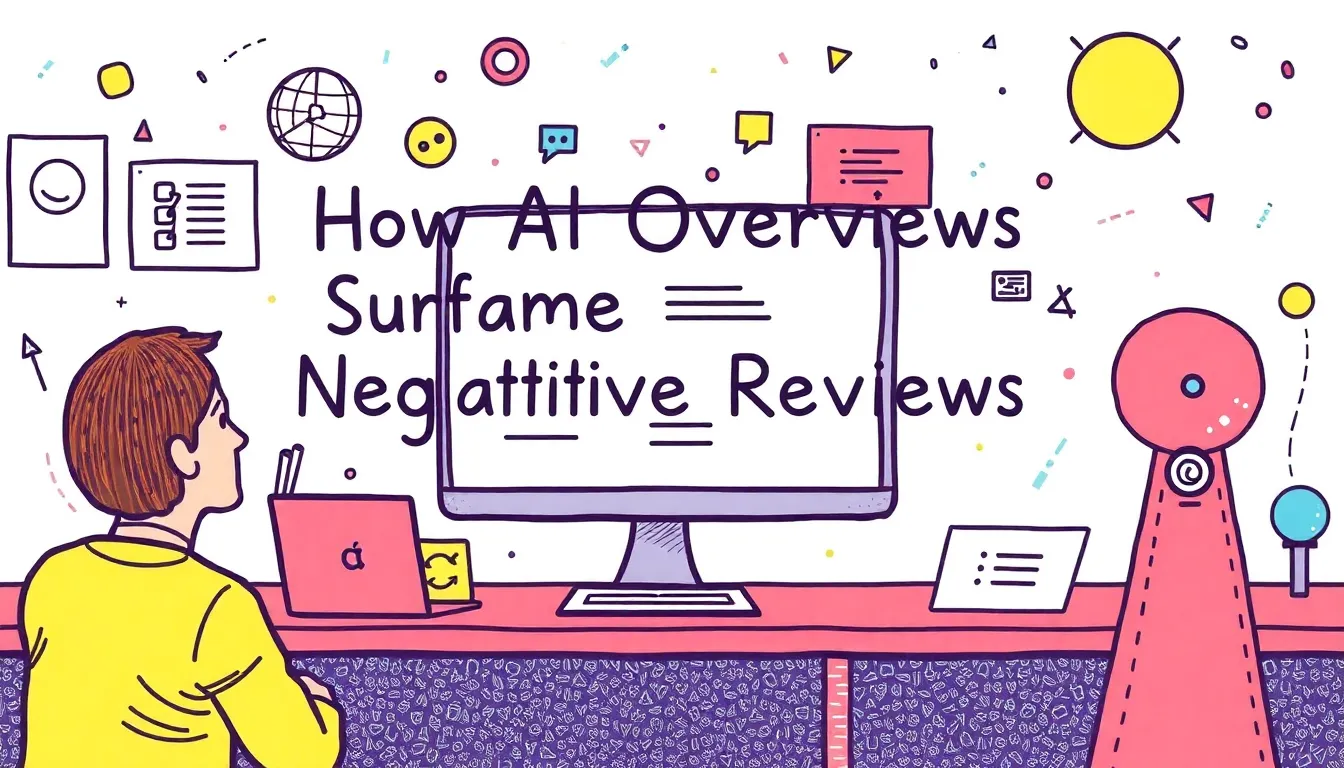
How AI Overviews Surface Negative Reviews and What To Do
Why AI Search Is Changing Brand Reputation Management
Artificial intelligence has fundamentally reshaped how people discover information about brands online. Tools like ChatGPT, Perplexity, and Google’s AI Overviews no longer simply list links — they synthesize user sentiment, pulling from Reddit threads, review platforms, and forum discussions to build comprehensive answers. The problem is that these answers often include negative brand signals even when users never asked about problems. Someone searching for the best CRM software might receive an AI-generated summary that includes old complaints about a brand they were considering — without ever intending to research negative feedback. With AI Tools Integration becoming central to modern search behavior, this creates a new reputation challenge for businesses of all sizes. Traditional reputation strategies focused on suppressing specific search queries like ‘brand + reviews,’ but that approach is no longer enough. AI engines treat every product comparison as a sentiment audit, scanning complaint sites, support threads, and gripe forums as part of their response generation. Brands that ignore this shift risk having outdated or misleading information define their public image in AI-generated answers, costing them customers and credibility before a conversation even begins.
What Makes AI Engines Surface Certain Complaints Over Others
Not every negative mention ends up in an AI-generated answer, but research into Q1 2026 AI citation patterns reveals four consistent signals that increase the likelihood of a complaint being surfaced. First, recency combined with volume matters — fresh complaints backed by multiple corroborating sources are weighted heavily. Second, specificity plays a major role; vague posts are filtered out while detailed reviews naming specific product features and outcomes are treated as valuable context. Third, platform authority is critical. Sources like Reddit, Trustpilot, G2, and established industry forums are treated as credible by AI engines, meaning complaints on these platforms carry far more weight. Fourth, recurrence across sources signals a verified pattern to AI systems — if the same issue appears in three or four independent locations, it is far more likely to be cited. Understanding these four signals is essential for any brand investing in modern digital strategy. Just as an Auto Backlinks Builder helps distribute content authority across the web, brands must think strategically about where their positive signals appear and how frequently they are reinforced to counterbalance negative content that AI tools might otherwise amplify in comparison queries.
A 4-Step Framework to Audit and Rebuild Your AI Reputation
Protecting your brand in the age of AI-powered search requires a proactive, structured approach. The first step is auditing your negative signal footprint by querying AI tools directly. Type ‘pros and cons of [your brand] vs [competitor]’ into ChatGPT or Perplexity and screenshot the results. On Google, use targeted site searches to find indexed complaints. The second step is prioritizing which issues can realistically be addressed — some posts can be removed through platform policies, while others require direct outreach or legal review. The third step is rebuilding your positive content layer. Publishing detailed case studies, updated product guides, and authentic customer success stories gives AI engines accurate, recent, and authoritative material to cite instead. Tools like an AI Image Generator can help brands create compelling visual content that supports this positive narrative across platforms. The fourth step is suppressing negative signals through consistent content volume — the more high-quality, specific, and widely distributed your positive content is, the less likely AI engines are to default to outdated complaints. Reputation management in 2026 is not about hiding problems; it is about ensuring that the most accurate and helpful information about your brand is what AI tools find and feature first.
Source: Data Shows AI Overviews Exposing Negative Reviews Without User Intent. What To Do Next