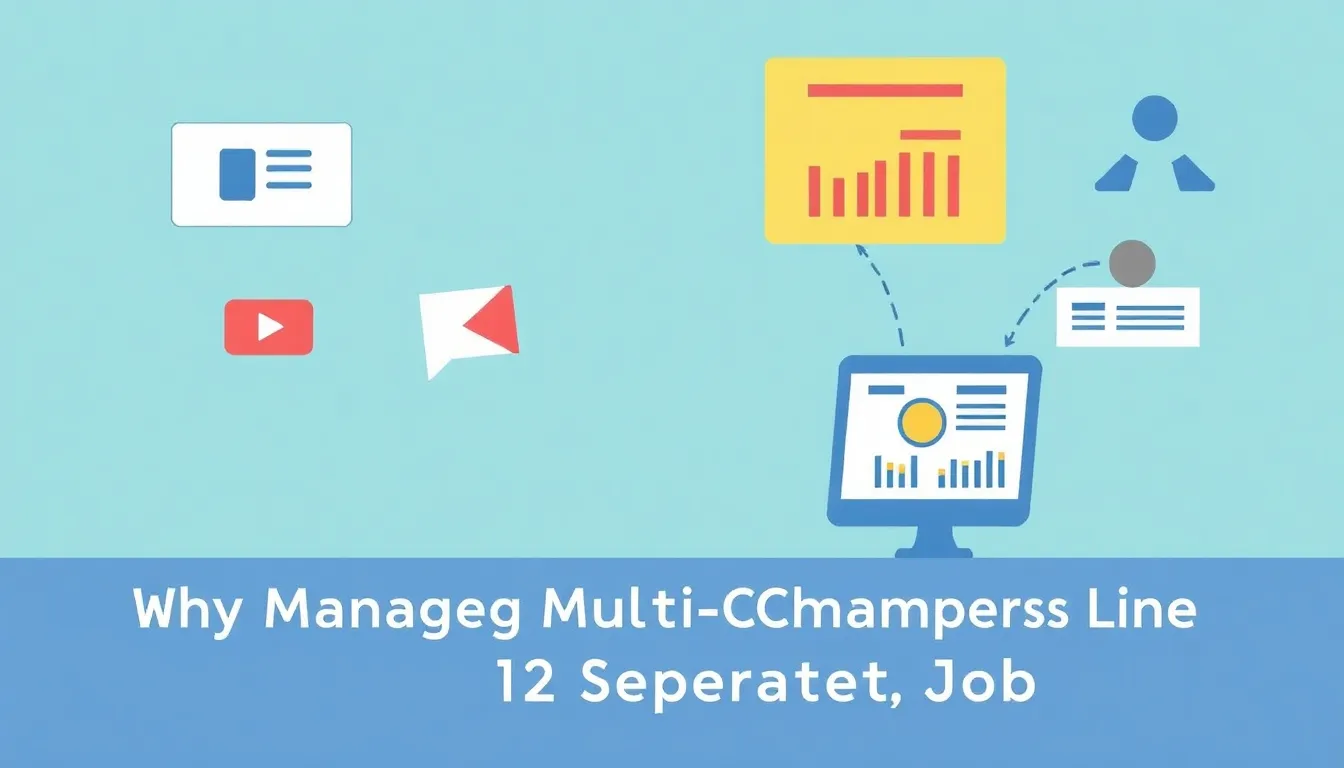
Why Managing Multi-Channel Campaigns Feels Like 12 Separate Jobs
The Multi-Channel Burden Facing Modern Paid Media Teams
If you manage paid media campaigns across multiple platforms, Monday mornings probably follow a familiar and exhausting pattern. You pull data from Google Ads, Meta, LinkedIn, TikTok, and a handful of other networks, drop everything into a spreadsheet, and somehow make it tell a unified story before your first client call. It sounds manageable in theory. In practice, it consumes hours that could be spent on actual strategy.
The reality is that what most people call campaign management is largely administrative labor. Logging in and out of platforms, reformatting data exports, rebuilding campaign briefs from scratch for each network’s unique structure, and reconciling attribution models that were never designed to speak the same language. Industry estimates suggest paid media managers spend anywhere from five to nine hours each week on these tasks alone. For anyone running more than three or four active networks simultaneously, that figure is likely conservative. Multiply it across a full agency managing multiple clients and the numbers become staggering. We’re talking about the equivalent of five full working days every single month consumed by tasks that generate zero direct value for clients or campaign outcomes.
The Hidden Costs Beyond Time: Errors, Lag, and Strategic Drift
The time drain is significant, but it may not even be the most damaging consequence of fragmented multi-channel management. The deeper problem is informational lag. When campaign performance data is scattered across a dozen separate platforms and only consolidated once a week, critical optimization opportunities disappear before anyone notices them. A budget imbalance between LinkedIn and Google might not surface until thousands of dollars have already been misallocated. A creative that stopped delivering results on Wednesday might not get flagged until the following Monday morning review.
There is also the issue of strategic drift, which is subtler but equally costly. When campaigns are built natively inside each platform using separate interfaces and separate workflows, consistency erodes over time. Audience definitions gradually diverge. Budget logic becomes inconsistent from one network to the next. Creative strategy shifts not because of a deliberate decision but because the person building the fifth campaign brief of the day was simply fatigued. For agencies, this problem compounds further across dozens of clients, each requiring separate credential sets, separate dashboards, and separate reporting exports that must be manually combined every single week. The cumulative effect on margins, quality, and team morale is substantial.
How AI Tools Integration Is Transforming Cross-Channel Ad Operations
The good news is that the industry is beginning to catch up with the scale of this problem. AI Tools Integration is emerging as one of the most meaningful shifts in how performance marketing teams operate. Platforms that unify campaign management, reporting, and optimization across multiple ad networks are reducing the administrative overhead that has quietly drained budgets and burned out practitioners for years.
Beyond workflow consolidation, solutions like AI Content Aggregator technology are enabling teams to pull performance signals from across all their channels into a single, real-time view. This means optimization decisions can be made based on current data rather than last week’s spreadsheet. Meanwhile, AI Image Generator capabilities are helping creative teams produce and test platform-specific assets faster, reducing the bottleneck between strategy and execution. Together, these technologies are not replacing the expertise of skilled media managers. They are removing the low-value repetitive work that prevents those managers from applying their expertise where it actually matters. The teams that adopt these tools early stand to recover significant time, reduce costly errors, and build a more consistent and competitive approach to multi-channel advertising at scale.
Source: Your campaigns span 12 channels. Why does it feel like 12 jobs? | MarTech