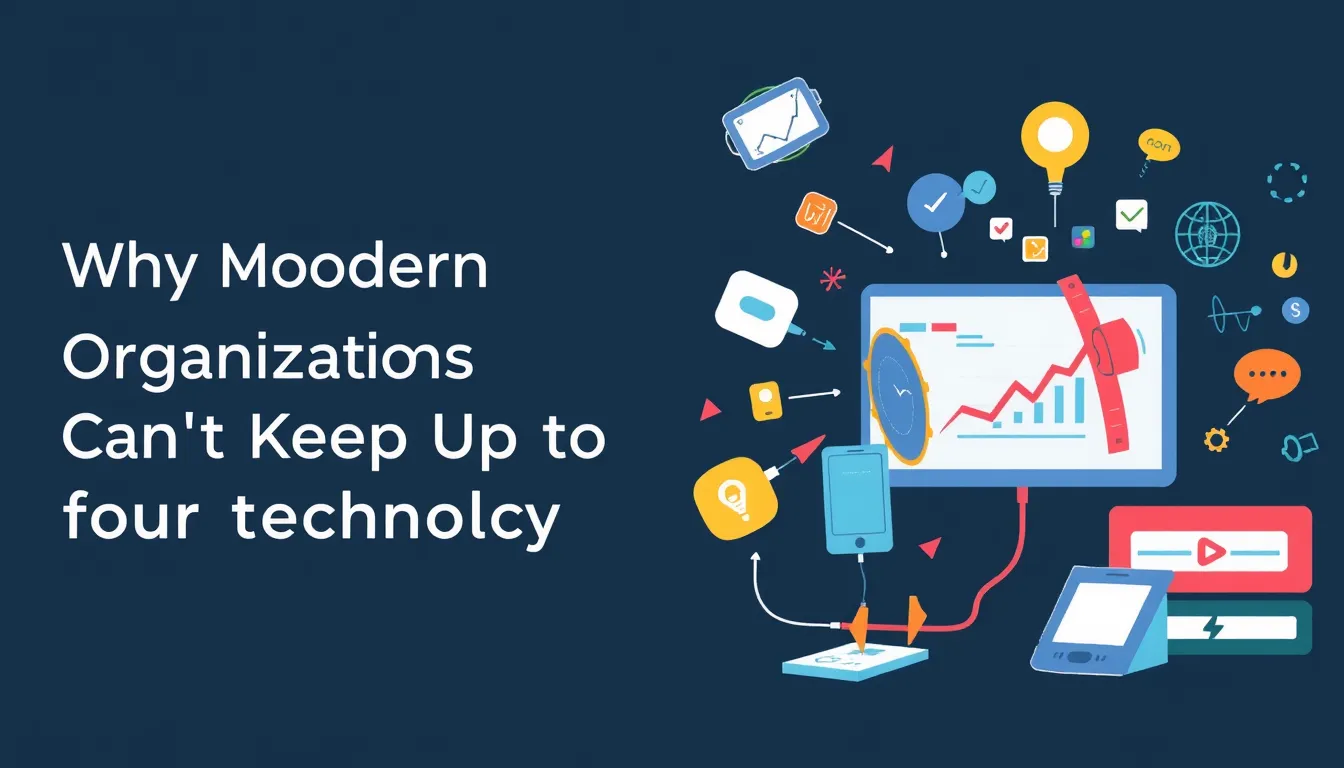
Why Modern Marketing Organizations Can’t Keep Up With Technology
The Explosion of MarTech and What It Means for Your Organization
The marketing technology landscape has undergone a staggering transformation. In 2011, marketers could choose from approximately 150 different tools. Today, that number has exploded to over 15,500 specialized platforms. This isn’t merely an arithmetic problem—it represents a fundamental shift in how marketing work gets produced and coordinated.
What changed wasn’t just the quantity of available solutions. Instead, these technologies have become deeply interconnected infrastructure rather than isolated support systems. Modern martech stacks connect customer relationship management, marketing automation, digital asset management, personalization engines, workflow tools, analytics platforms, and commerce systems into unified ecosystems. Data flows seamlessly between these platforms, triggering automated campaigns and adjusting customer experiences in real-time based on behavioral signals.
This technological integration means that marketing activities once handled independently by separate teams now depend on each other. Content journeys from brief creation through production to final activation across multiple platforms. Customer behavior recorded in one system immediately influences what happens next across the entire tech stack. The infrastructure itself has become the production mechanism, not just a support layer. Yet most organizations haven’t restructured their teams and governance models to match this reality.
How Specialization Created Organizational Bottlenecks
Businesses responded logically to technological complexity by hiring specialists. Marketing operations professionals, martech experts, creative operations managers, CRM specialists, data engineers, and analytics professionals emerged as critical roles. Each brings deep expertise that no generalist could develop. This specialization made sense—complex systems require qualified experts.
However, this strategy inadvertently created a structural problem. Expertise concentrated within defined functions while the actual production system spanned across those boundaries. Consider personalization as a concrete example: implementing true personalization requires customer data governance, consent management, identity resolution, product information, audience segmentation, decisioning logic, content creation, production workflow, campaign activation, and performance measurement. These responsibilities typically scatter across marketing, technology, legal, data, product, commerce, and customer service departments.
The customer experiences one cohesive brand with seamlessly connected systems, yet behind the scenes, multiple teams with different priorities, budgets, and reporting structures must coordinate. While specialization deepened expertise, it didn’t establish the decision-making relationships needed to make interconnected systems work effectively. When AI tools and Auto Backlinks Builders automate workflows, the gaps become more obvious because decisions must move faster across these siloed functions, exposing governance and accountability weaknesses that slow everything down.
Why AI Integration Exposes Your Organizational Weaknesses
AI Image Generators, intelligent workflow automation, and AI Tools Integration amplify existing organizational problems. When marketing relied primarily on human effort, slow handoffs between departments were merely inefficient. Now that AI automates content creation, data analysis, and campaign optimization, organizational bottlenecks become real constraints on speed and effectiveness.
McKinsey’s research on marketing operating models revealed a troubling reality: only 27% of C-suite marketing and growth executives surveyed believed their organizations had mature operating models for advanced use cases. This maturity gap explains why many companies struggle to extract value from AI investments—the technology moves at machine speed, but decision-making still requires navigating organizational boundaries designed for different eras.
AI also demands clear governance around data quality, compliance, brand consistency, and risk management. When authority remains divided among specialist functions, establishing these guidelines becomes complex. An AI image generator needs clear brand standards, but creative, legal, marketing operations, and compliance teams may have competing concerns. Auto backlinks builders require SEO expertise aligned with content strategy aligned with technical capability. AI tools integration requires understanding how systems communicate, who owns data quality, and how decisions propagate across platforms. Without clarity on authority and accountability, AI deployments stall, duplicate efforts, or create compliance risks.
Practical Steps to Align Your Organization With Modern MarTech Reality
First, audit your current decision-making flow for major marketing initiatives. Map how personalization campaigns, content launches, or customer experience changes actually move through your organization. Identify where decisions slow down, get revisited, or require multiple approvals from disconnected functions. This reveals your actual governance structure versus your official org chart.
Second, establish clear cross-functional ownership for your AI tools integration strategy. Rather than letting each department evaluate solutions independently, create a governance body that includes martech, creative operations, legal, data, and technology leadership. This group should define standards for AI image generator usage, compliance requirements, brand guidelines, and data handling.
Third, invest in documentation and transparency around authority. Who decides when an AI tool deploys? Who owns data quality for auto backlinks builders or personalization engines? Who determines brand consistency for AI-generated content? These decisions shouldn’t live in informal conversations—they should be documented and accessible.
Finally, consider structural changes. Some organizations create integrated program management roles that sit between specialized functions, others establish AI centers of excellence that coordinate tool selection and governance, and some restructure around customer journeys rather than capabilities. The specific solution depends on your context, but the principle remains: your organizational structure must evolve to match your interconnected technology infrastructure, or AI investments will underperform regardless of tool quality.
Building Mature Marketing Operating Models for the AI Era
Creating a mature marketing operating model means establishing systems where specialized expertise remains deep while decision-making crosses functional boundaries efficiently. This requires three foundational elements: clear authority structures, documented accountability, and shared metrics across functions.
First, authority clarity means defining who decides within each domain. When does the CRM team override marketing on data governance? When do creatives override operations on timeline decisions? When does compliance block initiatives? Without predefined authority, urgent decisions create organizational conflict rather than fast resolution.
Second, accountability must follow workflows, not just org charts. When an AI-personalization campaign underperforms, who’s responsible? When an auto backlinks builder strategy produces low-quality links? Accountability should attach to outcomes that cross functions, with clear documentation of who participated in the decision and why.
Third, establish metrics that reward cross-functional success. If marketing operations teams are evaluated solely on platform uptime and creative teams on content volume, incentives misalign. Shared metrics around customer acquisition cost, lifetime value impact, or time-to-market for campaigns create natural collaboration.
The most successful organizations treating AI tools integration as an organizational challenge, not just a technology challenge. They invest in governance, communication, and structural changes alongside tool selection. This approach prevents AI image generators from creating brand inconsistency, ensures auto backlinks builders serve strategic SEO goals, and allows martech stacks to deliver on their integrated potential.
Source: Marketing has outgrown the organization built to run it | MarTech